
Acoustic Wave Mechanics

Acoustic Physics Research

A systematic repository of publication-grade literature detailing amplitude tracking, phase cancellation models, and binaural processing frameworks engineered for sensory isolation.
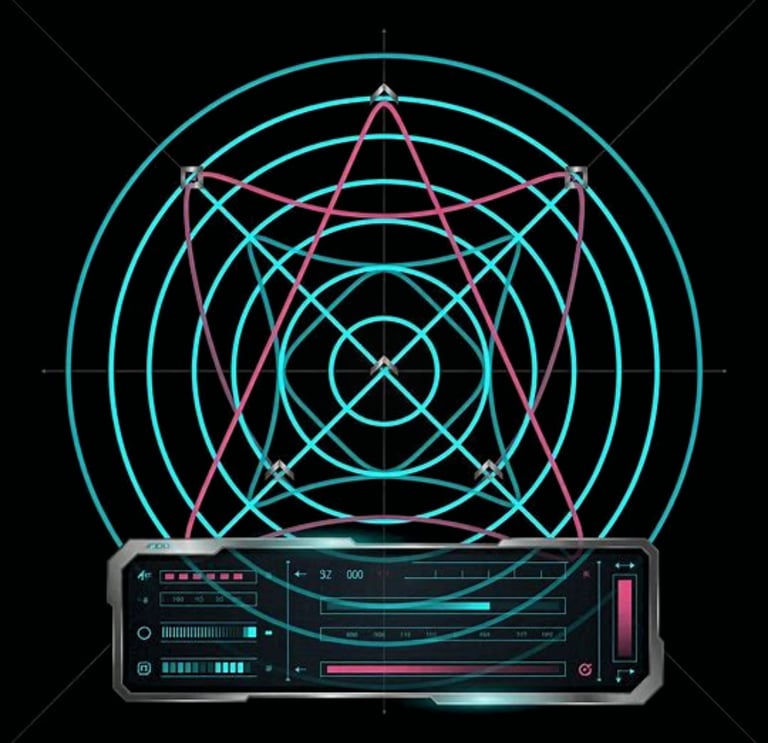
A digital audio signal processing visualization tool illustrating phase alignment.

Acoustic Engineering Blueprint

Empirical Audio Design

We strictly reject pseudoscientific claims and mystical vibrations. Our work focuses entirely on phase aligned 48kHz offline render methods and amplitude tracking to engineer a complete auditory shield for deep focus.

Every profile undergoes testing to isolate the auditory cortex from ambient noise. We build optimized deep work background soundscapes and background noise for concentration to prevent extreme workspace overstimulation.


A technical vector diagram representing an advanced audio mastering methodology.
The Laboratory

The Research Team

Our team develops specialized audio structures to deliver an active studying background that helps quiet a racing mind. We leverage phase-aligned layouts to generate clean background noise for concentration without digital artifacting.

100%

Phase-Aligned Renders

0%

Digital Clipping Triggers

Acoustic Validation Matrix

Review our technical publications detailing native 32-bit float audio mastering configurations. Access exact system blueprints engineered to block out noisy room mates and establish a steady studying background.

Acoustic Screening Arrays

Deploying continuous dark screen video modules engineered to isolate your local environment. Utilize this optimized black screen background noise for concentration to prevent visual overstimulation during deep study blocks.

Frequently asked questions

Is your audio methodology clinically proven or medically validated by neurological institutions?

No, and we explicitly reject medical-grade framing. We do not produce therapeutic, clinical, or healing tools. Our platform is an empirical acoustic engineering framework, not a medical installation. We design mathematical background soundscapes optimized strictly for environmental sound masking and spatial audio containment. Our validation matrix is measured through objective acoustic parameters—such as phase cancellation thresholds and ambient decibel dampening metrics—engineered simply to block out noisy room mates and establish a steady studying background without lyrics.

How do your soundscapes structurally differ from generic, automated online white noise loops or basic lofi tracks?

Generic loops rely on lossy, highly compressed files that introduce unpredictable digital artifacts, harsh clipping thresholds, and looping seams that cause subtle cognitive distractions. Our engineering pipeline relies entirely on a native 32-bit float audio mastering architecture and phase-aligned 48kHz offline render configurations. By integrating a strict spectral cleaning 300Hz cut workflow and a 250Hz peaking cut mix fix, we eliminate mid-range frequency accumulation. We then layer smooth Voss-McCartney pink noise and brownian 1/f² sub-bass masking with a steep linear lowpass filter capped at an 11kHz brickwall threshold. This delivers an absolute, continuous focus sound design that completely isolates the listening environment.

Why do you deploy fixed offline renders instead of generating interactive, real-time algorithmic wave modulations?

Real-time, procedural browser-based engines introduce systematic processing jitter, random transient spikes, and fluctuating device CPU loads that corrupt audio phase alignment. To achieve absolute phase preservation, every signal vector must be mathematically frozen during compilation. Our offline renders allow us to inject deep multi-axis channel routing and complex toroidal 16D pseudo-spatialization paths. Using an equal-power panning model with fixed spatial orbital sweeps, we sweep across the golden ratio elevation matrix with non-repeating panning techniques. This level of sub-millisecond precision is computationally impossible to execute live in a standard web browser without introducing digital clipping triggers.

Your engineering documents reference entrainment arrays. How exactly are these frequencies paired inside the stereo field?

Our acoustic arrays avoid standard, harsh single-frequency tones by deploying three distinct, isolated dual-channel binaural setups running on independent phase lines. We establish a 40Hz gamma audio carrier setup utilizing a left 150Hz and right 190Hz frequency pairing. This is reinforced by a secondary 10Hz alpha frequency carrier guide using a left 250Hz and right 260Hz channel pairing. Finally, deep environmental anchoring is maintained via a 2Hz delta deep audio layer configured with a left 90Hz and right 92Hz low track pairing. This highly complex, stacked frequency configuration creates an immovable auditory shield for deep focus.

Does listening to your high-fidelity sound fields during a continuous 10-hour straight session risk causing auditory overstimulation or screen fatigue?

On the contrary, our entire blueprint is engineered specifically to eliminate the audio triggers that cause cognitive fatigue and zoning out. Standard commercial tracks contain erratic micro-burst transients that keep the brain on constant alert. Our algorithmic micro-bursts are strictly modeled with an ultra-smooth 0.8ms attack and 5ms decay transient structure. They use pseudo-random panning microbursts running at a microscopic 0.0035 peak amplitude, meaning they clean the 'static in your head' without ever breaching your conscious threshold. Combined with cardiorespiratory timing background audio modulations that gently shift gain layout scales, this delivers the ultimate calm audio blueprint for working in chaotic environments.