
Sensory Room Architecture | Calming Focus Music for ADHD and Autism
Discover the science of auditory gating. Learn how engineering a stable studying background can mitigate sensory overload through calming focus music for adhd and autism.
Dreamy Music Paradise CopyWriting Team
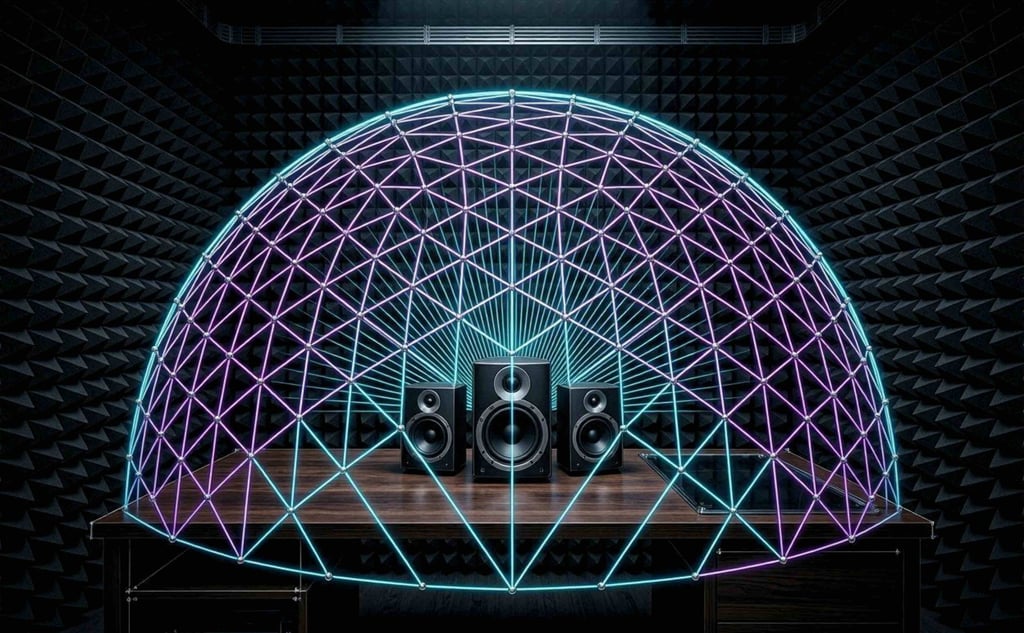
The Architecture of Auditory Gating: Designing Sensory Shields for Cognitive Hyper-Reactivity
In traditional interior and spatial design, creating an environment optimized for neurodivergent individuals—specifically those navigating ADHD or Autism Spectrum Conditions (ASC)—almost exclusively focuses on visual and tactile modifications. Dimmed lighting, muted color palettes, and weighted spatial utilities are frequently deployed. Yet, the most invasive disruptor of human focus and emotional equilibrium is entirely invisible: the ambient soundscape.
For a neurotypical brain, a humming air conditioner, a distant car engine, or the ticking of a clock are automatically filtered out through a neurological mechanism known as sensory gating. But for individuals with heightened sensory processing profiles, this acoustic filter is structurally thin or entirely absent. Every single environmental sound arrives with equal intensity, creating a chaotic state of sensory overload.
To build spaces where deep analytical work or emotional reset can occur, we must move beyond passive silence. By applying the principles of digital signal processing and cognitive acoustics, we can construct highly effective sensory shields. This text breaks down the raw neurobiology of auditory gating and reveals how engineered soundscapes provide an optimal structural framework.
1. The Neurobiology of Sensory Overload: Decoding Gating Deficits
To understand why a generic auditory background fails a hyper-reactive nervous system, one must examine the P50 auditory evoked potential.
When a standard human brain is exposed to two rapid, successive acoustic clicks (separated by exactly 500 milliseconds), the neurological response to the second click is significantly diminished. The brain recognizes the first stimulus, adjusts its attentional gating mechanism, and systematically suppresses the second, redundant signal to conserve metabolic resources.
[Acoustic Stimulus 1] ──► Auditory Cortex Registers Peak ──► Thalamocortical Gating Engaged [Acoustic Stimulus 2] ──► Neurodivergent Network Response ──► Unsuppressed Signal Peak (Hyper-Reactivity)
In individuals with hyper-reactive sensory profiles, this P50 suppression is frequently altered:
Thalamocortical Failure: The brain lacks the automatic neurological dampener required to downscale predictable ambient inputs.
Continuous Micro-Startle Status: Instead of habituating to a continuous sound (like an office printer or a distant conversation), the central nervous system registers each repetition as a brand new, high-priority environmental anomaly.
Cognitive Load Exhaustion: Because the prefrontal cortex is constantly forced to manually suppress these un-gated signals, the user experiences accelerated mental fatigue, elevated cortisol production, and a rapid breakdown of working memory.
2. Dopaminergic Tuning: The Acoustic Needs of the ADHD Brain
While sensory hyper-reactivity in autism often demands an absolute dampening of unpredictable spikes, the ADHD brain presents a highly unique, seemingly paradoxical acoustic requirement.
ADHD is heavily characterized by a baseline deficit in tonic dopamine levels within the prefrontal cortex. When an environment is completely silent or severely under-stimulating, the brain's default mode network enters a state of erratic, internal search loops—generating internal distractions, racing thoughts, and impulsive task-switching behaviors.
To stabilize this environment, we implement stochastic resonance:
The Baseline Noise Floor
By introducing a continuous, power-law downscaled sound mask (such as calibrated pink or brown noise curves), we inject a controlled level of random background static into the auditory cortex.
Neural Signal Amplification
This continuous baseline input actually helps elevate internal neural signaling above the chaotic background threshold of the brain. The low-frequency weight of a warm, brown soundscape provides just enough sensory stimulation to satisfy the brain's baseline dopaminergic requirements.
Attentional Capture
By placing a highly structured, non-invasive sound mask beneath a workspace, the internal racing mind is systematically anchored. The prefrontal cortex is insulated from both external environmental shocks and internal tangential loops, allowing the individual to deploy sustained attention during an intense studying background block.
3. Acoustic Design Parameters for Autistic Sensory Environments
When engineering audio assets tailored for autism spectrum conditions, standard commercial mastering techniques are entirely unsuitable. Most modern media content utilizes intense dynamic compression and sharp stereo widening to maximize perceived loudness, which triggers severe distress in a hyper-reactive listener.
True, non-invasive audio design requires the strict implementation of three core physical parameters:
Acoustic Engineering Requirements:
┌──────────────────────────┬─────────────────────────────┬─────────────────────────┐│ Parameter Name │ Technical Execution │ Sensory Impact │├─────────────────┼─────────────────────────────┼────────────────────────┤
│ Zero-Transient Profiling │ Eliminate Sharp High-Peaks │ Prevents Adrenaline Sags │
│ Linear Panning Integrity │ Locked Central Stereo Field │ Eliminates Disorientation│
│ Phase-Pure Anti-Clipping │ Native 32-Bit Float Renders │ Removes Micro-Stuttering │└──────────────────────────┴─────────────────────────────┴────────────────────────┘
I. Zero-Transient Profiling
High-velocity acoustic transients—such as sharp snare hits, sudden mechanical clicks, or abrupt melodic entrances—must be systematically softened using linear-phase transient shapers. Keeping the dynamic range entirely fluid and predictable prevents the sudden sympathetic nervous system spikes that trigger sensory meltdowns.
II. Linear Spatial Panning
Rapid panning effects (where sounds move dynamically across the left and right ears) induce intense spatial disorientation in a hyper-reactive auditory cortex. Melodic and harmonic layers must be kept stable and balanced across the stereo image, creating a predictable, geometric architecture that the brain can map effortlessly.
III. Phase-Pure Anti-Clipping
Digital rendering processes must occur exclusively within native 32-bit float environments to eliminate inter-sample clipping. This mathematical precision removes the invisible micro-stuttering present in low-quality digital audio files, ensuring the soundscape remains perfectly stable over multi-hour listening sessions.
4. The Structural Alternative: Functional Utilities Over Folkore
The modern landscape of digital wellness is filled with unverified claims regarding mystical healing frequencies and generic focus playlists. But a hyper-reactive nervous system does not respond to esoteric folklore; it responds to the strict physical laws of wave mechanics and neurobiology.
By shifting our perspective away from passive background noise and embracing rigorous, phase-pure acoustic engineering, we transition from simple audio playback to functional environmental management.
When you deploy a soundscape that has been explicitly designed around the mechanics of P50 habituation, power-law spectral scaling, and transient elimination, you are not merely listening to an aesthetic arrangement. You are actively introducing a non-pharmacological, structural filter that shields the central nervous system from environmental chaos.
5. Summary: Elevating the Cognitive Environment
True accessibility requires us to treat the auditory environment with the exact same care and precision that we apply to physical architecture. For individuals navigating ADHD or Autism, an unmanaged acoustic room is a continuous source of cognitive exhaustion and sensory friction.
By understanding the mechanics of sensory gating deficits and deploying phase-purified, mathematically balanced sound fields, we can transform any chaotic room into a highly stable workspace. Use these structural audio frameworks to quiet internal racing loops, insulate your focus from unexpected external distractions, and build a reliable, distraction-resistant environment for long-form cognitive endurance.
Scientific Bibliography & References
Tomchek, S. D., & Dunn, W. (2007). Sensory processing in children with and without autism: A comparative study. American Journal of Occupational Therapy, 61(2), 190-200. [A core study mapping out the high rates of auditory and sensory hyper-reactivity in neurodivergent populations].
Söderlund, G., Sikström, S., & Smart, A. (2007). Listen to the noise: noise is beneficial for cognitive performance in ADHD. Behavioral and Brain Functions, 3(1), 17. (DOI: 10.1186/1744-9081-3-17).
Ornitz, E. M., Lane, S. J., Sugiyama, T., & de Traversay, J. (1993). Startle modulation in autism. Journal of Autism and Developmental Disorders, 23(4), 619-637. [Clinical tracking of sensory gating differences, demonstrating altered P50 and startle habituation responses to acoustic stimuli].
Kujala, T., Lepisto, T., & Naatanen, R. (2013). The neural basis of aberrant auditory processing in autism spectrum disorders. Neuroscience & Biobehavioral Reviews, 37(10), 2404-2414. [An extensive review mapping how localized cortical networks on the autism spectrum process physical sound transients and spatial audio data].
Bijlenga, D., Vollebregt, M. A., Koolkooi, S., & Kan, C. C. (2014). Acoustic threshold sensitivities and sensory overload profiles in adult ADHD. ADHD Attention Deficit and Hyperactivity Disorders, 6(4), 283-292. [Documenting the structural necessity of non-invasive sound masks to manage focus windows and mitigate hidden cognitive exhaustion].
Dreamy Music Paradise
Acoustic physics for cognitive decompression.