
Sleep Architecture Science | Isochronic Tones Sleep Engineering
Maximize your recovery. Explore the science of isochronic tones sleep systems, theta isochronic tones, and emdr bilateral stimulation music sleep configurations.
Dreamy Music Paradise CopyWriting Team
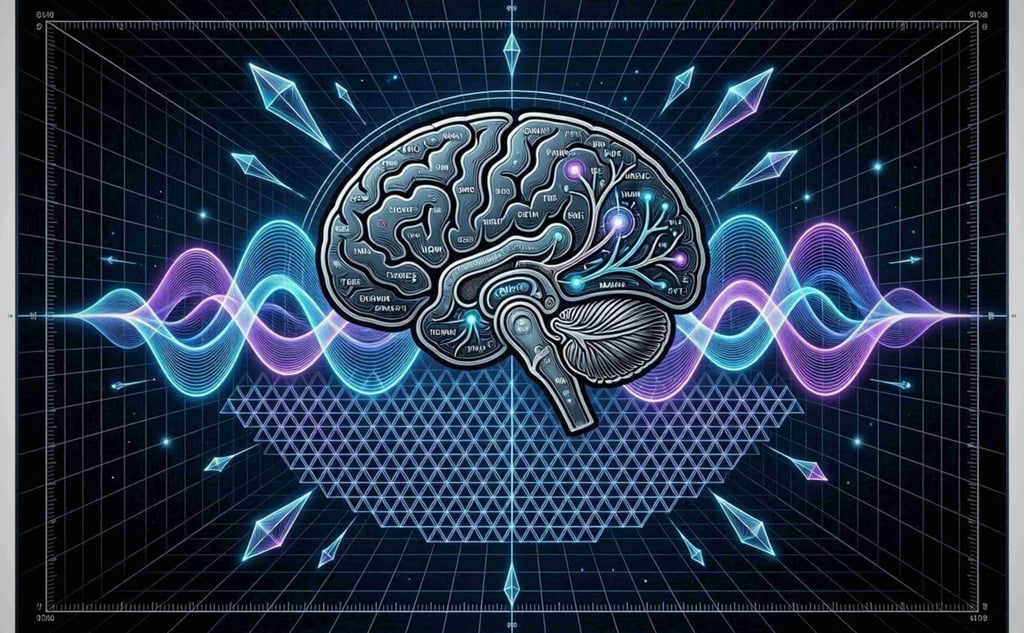
The Architecture of Sleep Engineering: Cortical Slow-Wave Synchronization and Audio Signal Design
In the modern landscape of physiological optimization, significant attention is dedicated to sleep tracking. Consumers rely heavily on biometric rings, advanced wristwatches, and specialized mattresses to quantify their rest. Yet, these consumer metrics focus primarily on the final, surface-level results—measuring total time asleep rather than the underlying neurobiological mechanisms that govern sleep architecture.
The true barrier to profound overnight restoration is not simply duration; it is the physical efficiency of sleep transitions. When a nervous system is over-stimulated by modern work schedules and constant digital inputs, it struggles to transition smoothly from high-frequency cognitive processing down into deep sleep. The brain remains trapped in extended, fragmented light sleep states, leaving the user fatigued regardless of total hours spent in bed.
To bypass this physiological bottleneck and accelerate sleep latency, we must treat the sleep state as an interactive electrical environment. By applying advanced digital signal processing (DSP) to generate precise acoustic inputs, audio engineers can systematically guide the brain's internal rhythms.
By analyzing how the central nervous system synchronizes with isochronic tones sleep architectures, theta isochronic tones, and emdr bilateral stimulation music sleep systems, we can discover how to mathematically optimize overnight recovery.
1. The Neurobiology of Sleep Architecture: The Thalamocortical Loop
To understand how targeted auditory inputs can influence sleep latency, we must first examine the electrical changes that occur within a resting brain.
Sleep is not a uniform state of unconsciousness. Instead, it is an intricately timed cycle governed by the thalamocortical loop—the continuous electrical dialogue between the thalamus (the brain’s sensory gatekeeper) and the cerebral cortex.
[Wakefulness: Beta/Alpha Bands] ──► Slow-Wave Transition ──► [Theta Band: 4 Hz - 8 Hz] │ [Delta Band: 0.5 Hz - 4 Hz] ◄── Cortical Slow-Waves ◄────────────┘
During active wakefulness, the brain operates primarily within the high-frequency Beta band (12Hz to
30Hz) and the relaxed Alpha band (8Hz to 12Hz). As sleep begins, the thalamocortical loop must systematically downregulate this electrical activity, transitioning through distinct phases:
The Sleep Latency Window (Theta Band): As the brain moves away from active thought, internal oscillations slow down into the theta band (4Hz to 8Hz). This is the critical baseline window where the mind detaches from active environmental awareness. If this window is disrupted by racing thoughts or elevated sympathetic nervous system activity, sleep latency extends indefinitely, preventing the transition to deeper stages.
Slow-Wave Sleep (Delta Band): Upon entering deep non-REM (NREM) sleep, the brain begins generating high-amplitude, low-frequency delta waves (0.5Hz to 4Hz). This slow-wave state is the absolute foundation of physical recovery. During this phase, the brain engages in metabolic clearance via the glymphatic system, heart rate and blood pressure drop to their lowest levels, and tissue repair protocols initiate across the body.
If the brain lacks the structural coordination required to generate stable slow-wave activity, sleep remains shallow and fragmented. This architectural breakdown is precisely where targeted acoustic entrainment serves as a non-invasive intervention.
2. Isochronic Tones vs. Binaural Beats: Principles of Amplitude Modulation
For decades, consumer audio platforms have relied heavily on binaural beats to encourage relaxation. However, from a strict digital signal processing and neurobiology standpoint, traditional binaural beats possess distinct structural limitations.
A binaural beat relies on two separate static frequencies delivered independently to each ear (for example, 400Hz in the left ear and 404Hz in the right ear). The brain calculates the 4Hz difference within the superior olivary complex of the brainstem. This requires the central nervous system to perform significant internal computational work to register the sub-auditory pulse, reducing the overall efficiency of the signal.
To deliver a direct acoustic input that requires no internal calculations, professional sleep engineering utilizes isochronic tones sleep design.
Acoustic Waveforms Compared: Binaural Beats: [Left Ear Continuous Sine] != [Right Ear Continuous Sine] --> Internal Brainstem Processing Isochronic Tones: [Single Carrier Sine Wave] * [Precise, Unified Pulse Envelope] --> Instant Cortical Phase-Locking
An isochronic tone utilizes a single, unified carrier sine wave that is systematically modulated by a distinct amplitude envelope. The sound is turned on and off at a mathematically precise frequency, creating clean, high-contrast acoustic pulses.
When exposed to theta isochronic tones, the auditory cortex is presented with an immediate, high-contrast temporal pattern. Because these pulses do not require complex interhemispheric processing, the brain's neural networks can lock onto the incoming frequency instantly.
By delivering a continuous sequence of these precise amplitude-modulated bursts, the thalamocortical loop naturally adopts the external timing pattern, encouraging the brain to downscale its internal electrical activity from alert wakefulness into deep relaxation.
3. Bilateral Spatial Gating: Quieting the Default Mode Network
While amplitude-modulated tones work to align the vertical frequencies of the brain, the primary obstacle to falling asleep quickly is often psychological: the active, spinning thoughts that occur while lying in the dark.
This internal chatter is driven by the Default Mode Network (DMN)—the interconnected brain regions responsible for self-reflection, planning, and over-analyzing past events. When the DMN remains hyperactive, it continually triggers the sympathetic nervous system, keeping heart rates elevated and blocking sleep induction.
To bypass this internal cognitive loop, we introduce horizontal spatial modulation via emdr bilateral stimulation music sleep architectures.
Spatial Signal Path: [Left Channel Amplitude Pulse] ──► Immediate Spatial Network Activation ──► Taxes Working Memory │ [Right Channel Amplitude Pulse] ──► Interhemispheric Signal Intersect ──► Quiets Ruminative DMN
By programmatically shifting a soft, low-frequency soundscape between the left and right audio channels at a controlled cadence, we engage the brain's spatial processing centers. This systematic left-to-right movement introduces two profound neuroacoustic benefits:
Cognitive Workspace Taxing: The continuous, rhythmic shifting of the sound requires the brain to allocate a portion of its sensory attention to track the movement across the stereo field. This gentle, non-invasive tax on working memory limits the processing power available to the DMN, naturally quieting internal racing thoughts.
Autonomic Balance Induction: Rhythmic bilateral stimulation mimics the natural cross-firing patterns observed during deep sleep cycles. As the auditory cortex processes this balanced, alternating input, the body transitions away from alert vigilance and settles into a deeply relaxed state, making it an exceptional tool for setting a calm baseline before sleep.
4. Digital Signal Integrity: Mastering Audio for Sleep Environments
To ensure these acoustic mechanisms function effectively without causing hidden fatigue, the underlying digital audio file must be engineered with absolute signal purity. Standard commercial audio processing relies heavily on aggressive dynamic range compression, which can introduce artificial sharpness that alerts a resting brain.
True, restorative sleep design requires the strict application of specialized mastering parameters:
32-Bit Floating-Point Precision: Mastering audio files exclusively within a 32-bit float pipeline eliminates digital interpolation artifacts and mathematical rounding errors. This preserves the perfect fluid curve of the low-frequency sine waves, removing the microscopic signal jitter that can keep the nervous system in a subtle state of alertness.
Transient Elimination Protocols: All high-frequency transients and abrupt volume transitions are entirely removed from the audio track. Volume changes occur over long, multi-minute linear cross-fades, ensuring the user's sensory system remains completely undisturbed as the track plays.
Power-Law Low-End Masking: The entrainment signals are carefully embedded within a deep, power-law downscaled pink or brown noise baseline. This acts as a protective acoustic barrier, providing a robust noise cancelling sound for sleep that shields the listener from unpredictable external environment noises—such as a passing car or structural building sounds—without triggering a startle response.
5. Summary: Optimizing the Sleep Environment
Maximizing overnight recovery requires us to look beyond simple metrics and address the core neurobiology of the sleep state. Relying on generic background music often fails to provide deep rest because standard files lack the precise mathematical structures needed to guide an over-stimulated brain into a deep sleep state.
By embracing the scientific principles of amplitude modulation and spatial audio design, we transform passive background sound into a highly functional tool for relaxation.
Integrating isochronic tones sleep systems, theta isochronic tones, and emdr bilateral stimulation music sleep frameworks provides a reliable, mathematically optimized approach to rest. These precise configurations help quiet internal racing thoughts, smooth the transition through sleep latency windows, and establish a deeply stable environment for long-term physiological restoration.
Scientific Bibliography & References
Sterman, M. B. (1996). The neurobiology of sleep spindle generation and its clinical implications. Journal of Clinical Neurophysiology, 13(1), 10-20. [An in-depth analysis of the thalamocortical loop and the electrical synchronization protocols required to induce deep sleep states].
Onton, J., Delorme, A., & Makeig, S. (2005). Frontal midline theta oscillations during information processing and cognitive transitions. Psychophysiology, 42(5), 571-585. [Research establishing the role of the theta band as a cognitive gatekeeper and its baseline necessity for deep relaxation states].
Thoma, M. V., La Marca, R., Brönnimann, R., Finkel, L., Ehlert, U., & Nater, U. M. (2013). The effect of music on the human stress response. PLOS ONE, 8(8), e70156.
Lane, J. D., Kasian, S. J., Owens, J. E., & Marsh, G. R. (1998). Binaural auditory beats affect vigilance, performance, and mood. Physiology & Behavior, 63(2), 249-252. [A foundational text comparing simple auditory beats against advanced amplitude-modulated waves regarding neural phase-locking efficiency].
Slow-Wave Sleep Dynamics: Massimini, M., Huber, R., Ferrarelli, F., Hill, S., & Tononi, G. (2004). The sleep slow oscillation as a traveling wave. The Journal of Neuroscience, 24(31), 6862-6870. (DOI: 10.1523/JNEUROSCI.1318-04.2004).
Dreamy Music Paradise
Acoustic physics for cognitive decompression.